
On Short Poems
and how they can say so much

First of all, I have to be honest: I have never written a good short poem. I won’t say I “can’t,” because you never know, but the skill it takes to say something vital and important in just a few words may well be out of my range. For some reason I do remember a short poem I wrote in graduate school called “The King of Slugs,” but believe me, I am the only one who ever liked it.
However, there are very short poems that lodge in my memory because they strike deep into my always-broken heart, making me feel connected to the poet, making me see the world anew.
This one only came to my attention recently, through social media. Yes, the discovery of new favourite poems is one reason I stay on social media!
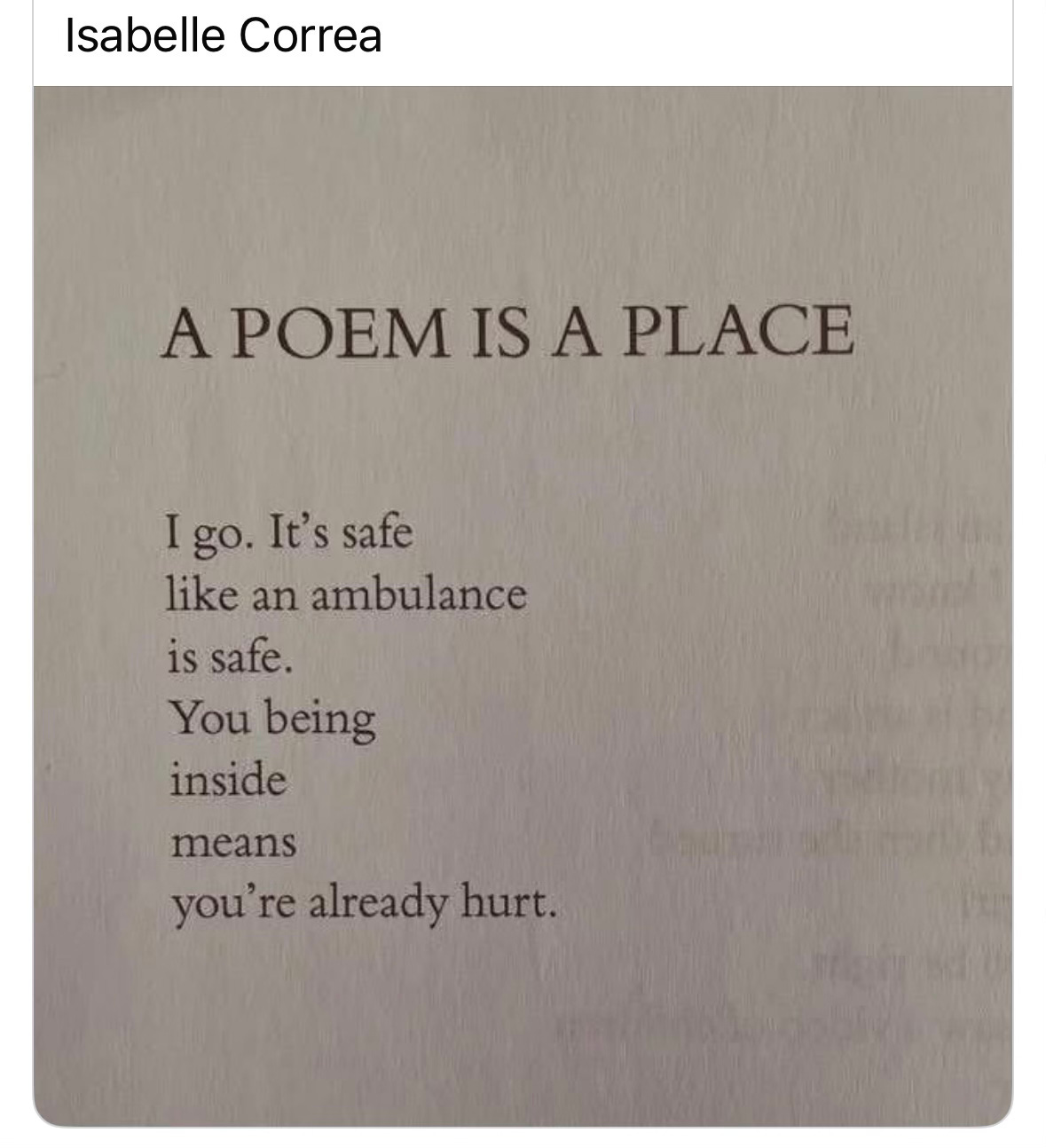
Note that the line breaks in this 7-line poem do a lot of work: “You being” lets us linger on what our own being might mean before “inside” puts us in that ambulance, helping explain the way in which an ambulance is safe, then “means” prepares us for the punch of “you’re already hurt.” We slow down while reading this short poem, but still crash headlong into the explanation of this metaphor that feels absolutely accurate and makes the poet a seer. Yes, you understand that I am hurt, and that a poem can be a place of safety for me, Ms. Correa. How did you know?
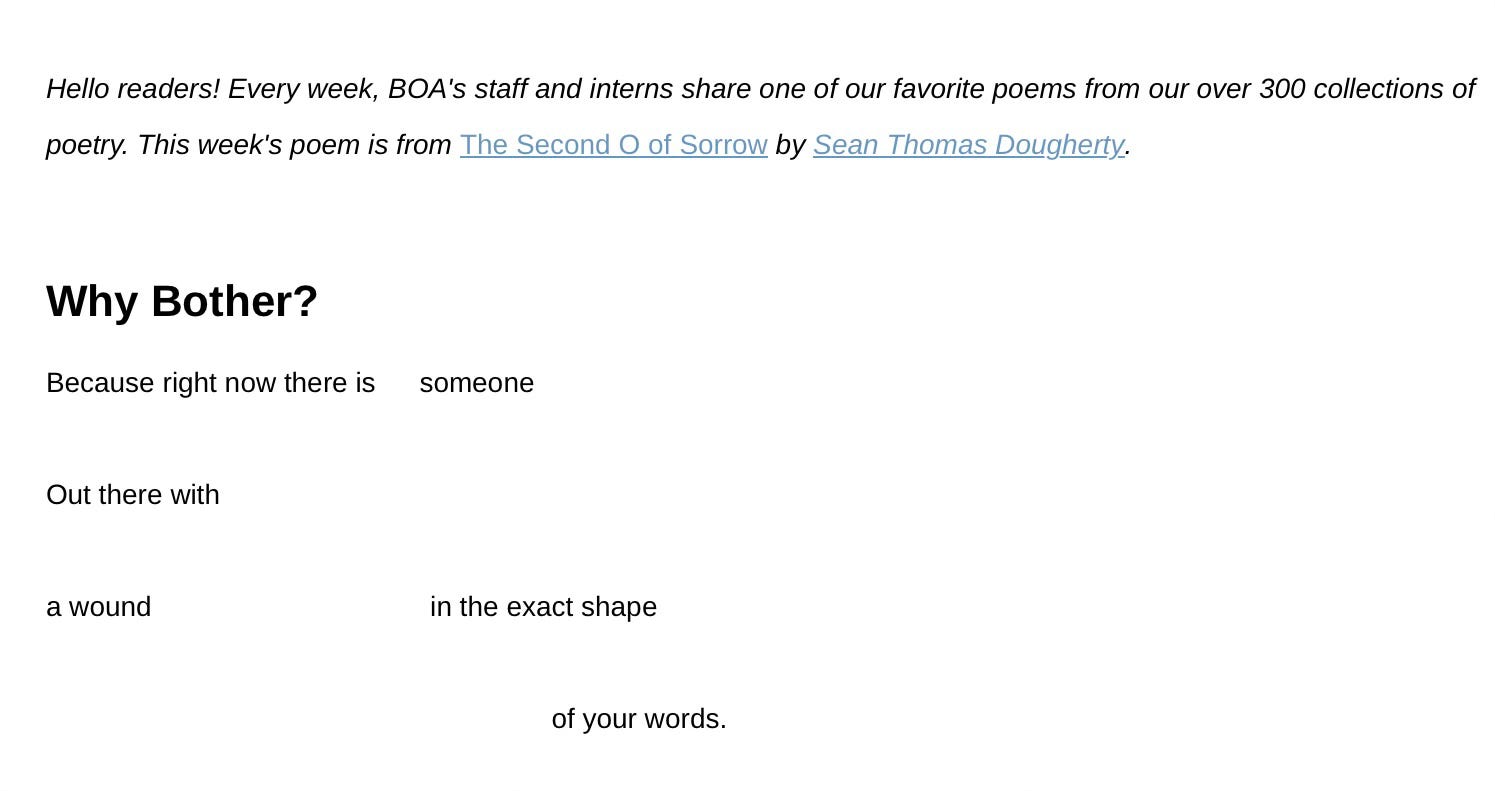
Then there’s Sean Thomas Dougherty’s oft-shared poem “Why Bother?”, which speaks directly to us as poets. Why bother writing our little poems, those pieces of our insides that make no money and seem to make no difference at all in the world?
Then finally a little poem by Gregory Orr that I saw years ago in a magazine—maybe American Poetry Review?—and committed to memory because I liked it so much. I also taught it year after year because students liked it and the writerly choices clearly add to the impact.
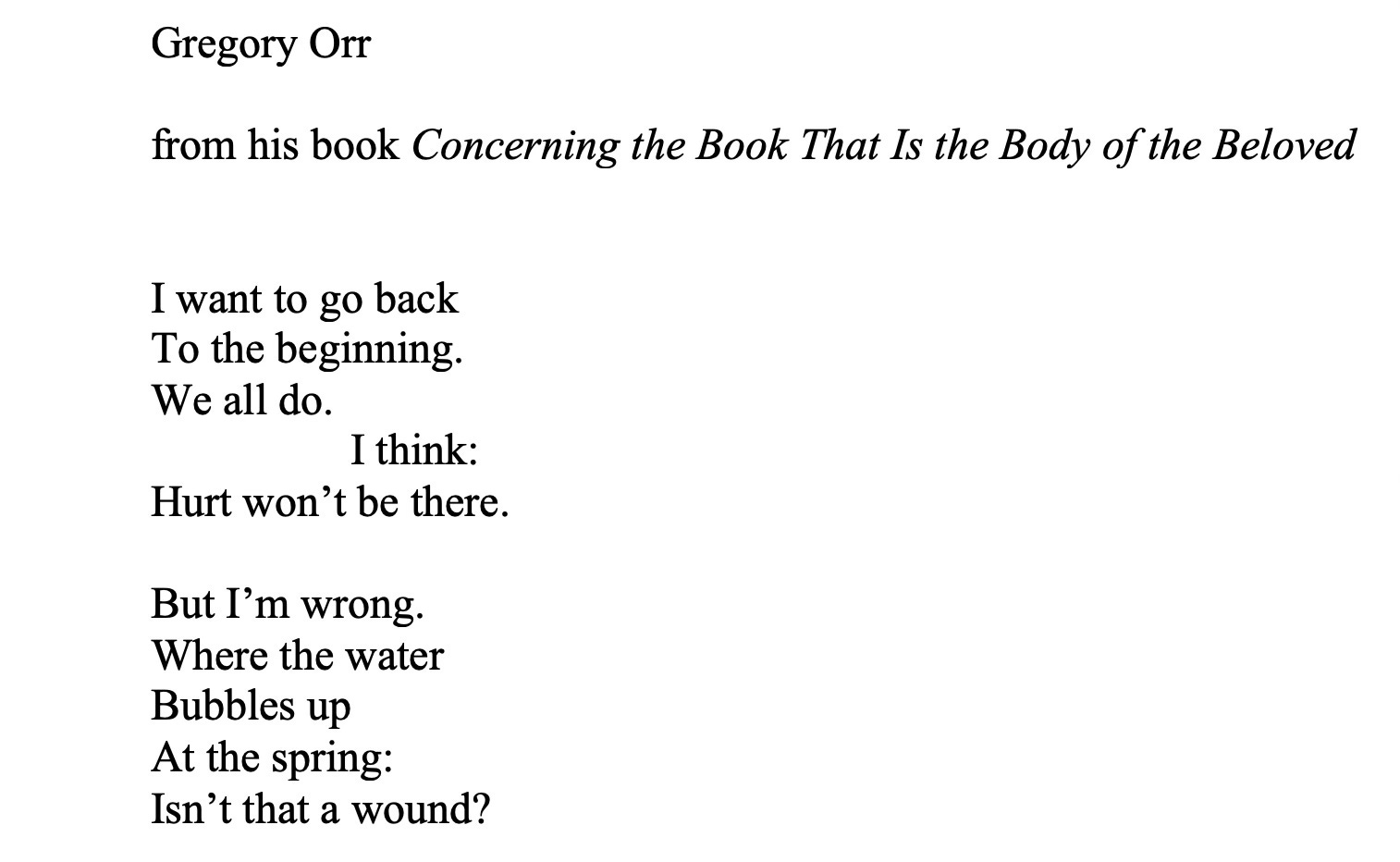
Oh, the confidence of “We all do” followed on almost the same line by “I think.” And then the first stanza wrapped up with the reason why so many of us (me, me, me!) “want to go back/To the beginning.” But—but!—no, the confident speaker tells us he’s wrong, and he’s wrong because of a metaphor that opens the whole poem to something much bigger. Then the final line, which asks us to consider what those bigger things might be. Is it a wound in the surface of the earth? Is a wound necessary for life, for growth? Do we as humans have to be wounded in order to live, to become?
Yes, well. I could go on. There are other short poems that I’ve read and remembered over the years. Maybe you have one that sticks with you? Maybe you’ve even written one? If so, please, please share in the comments!
NOTES FROM SCOTLAND
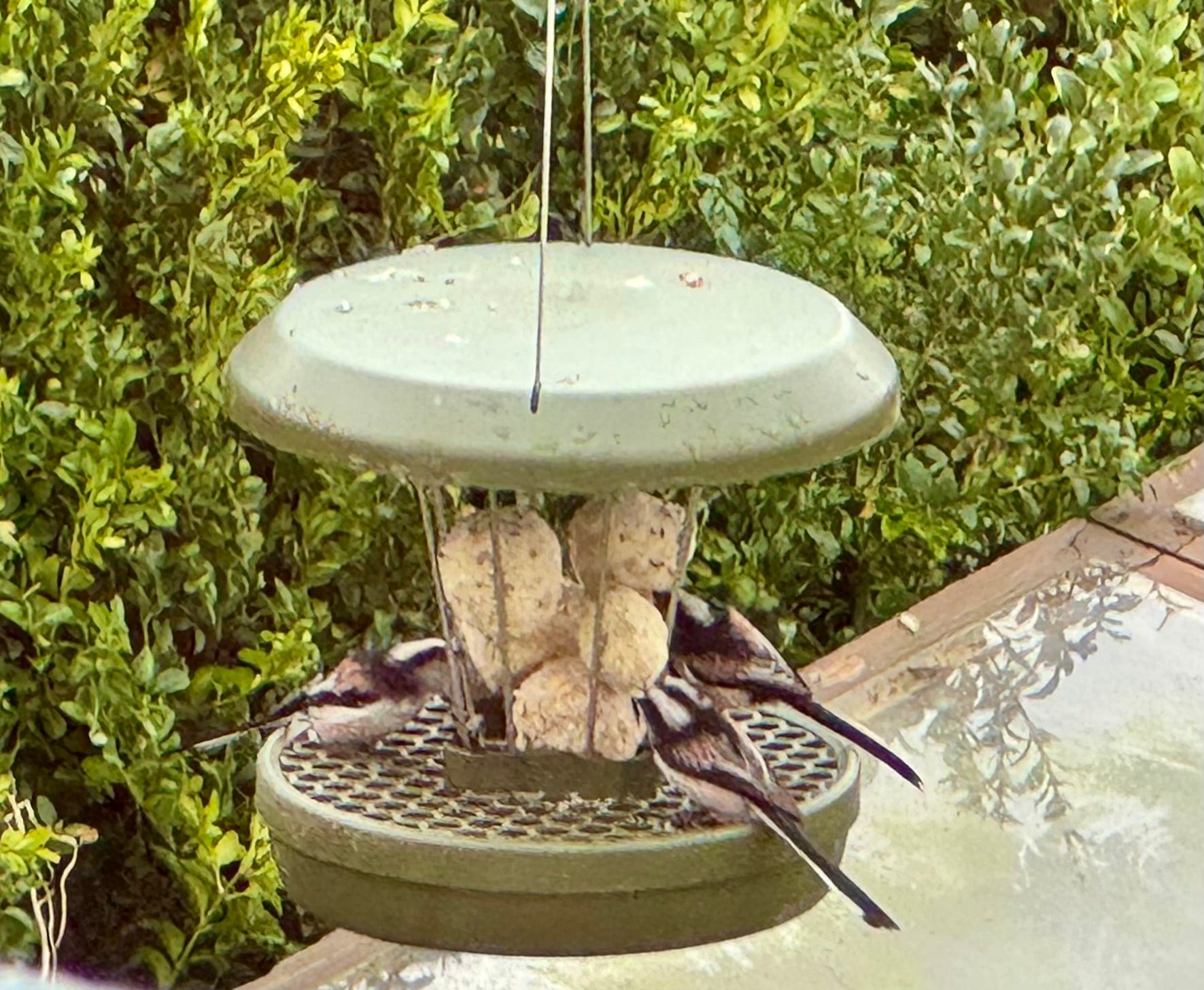
I think birds are a bit like short poems, at least the small ones that flit around the feeders in my back garden. I have been enjoying learning the names of birds here, including the long-tailed tits in the photo below (they love the fancy suet balls I order online—didn’t like the cheap ones from the local store). Just so you know, there are also blue tits, great tits (yes, yes, I know, my American friends—but that word isn’t really used in that way here), coal tits, marsh tits, willow tits, and…one more I’m forgetting. And of course European robins, chaffinches, dunnocks, blackbirds (a type of thrush, unlike the other black birds that include rooks, crows, ravens, and more). Naming the wildlife helps me feel connected to this place, chips away at the loneliness that seeps in when I find myself mired in small talk and really missing the American ability to cut through to more substantive conversations.
One of my favorite short poems:
The Coming of Light, by Mark Strand
Even this late it happens:
the coming of love, the coming of light.
You wake and the candles are lit as if by themselves,
stars gather, dreams pour into your pillows,
sending up warm bouquets of air.
Even this late the bones of the body shine
and tomorrow’s dust flares into breath.
https://www.poetryfoundation.org/poetrymagazine/poems/28891/separation-56d21285b2140